

home
Что посмотреть

«Паразиты» Пон Чжун Хо

Нечто столь же прекрасное, что и «Магазинные воришки», только с бо́льшим драйвом. Начинаешь совершенно иначе воспринимать философию бытия (не азиаты мы...) и улавливать запах бедности. «Паразиты» – первый южнокорейский фильм, удостоенный «Золотой пальмовой ветви» Каннского фестиваля. Снял шедевр Пон Чжун Хо, в привычном для себя мультижанре, а именно в жанре «пончжунхо». Как всегда, цепляет.

«Синонимы» Надава Лапида

По словам режиссера, почти всё, что происходит в фильме с Йоавом, в том или ином виде случилось с ним самим, когда он после армии приехал в Париж. У Йоава (чей тезка, библейский Йоав был главнокомандующим царя Давида, взявшим Иерусалим) – посттравма и иллюзии, замешанные на мифе о герое Гекторе, защитнике Трои. Видно, таковым он себя и воображает, когда устраивается работать охранником в израильское посольство и когда учит французский в OFII. Но ведь научиться говорить на языке великих философов еще не значит расстаться с собственной идентичностью и стать французом. Сначала надо взять другую крепость – самого себя.

«Frantz» Франсуа Озона

В этой картине сходятся черное и белое (хотя невзначай, того и гляди, вдруг проглянет цветное исподнее), витальное и мортальное, французское и немецкое. Персонажи переходят с одного языка на другой и обратно, зрят природу в цвете от избытка чувств, мерещат невесть откуда воскресших юношей, играющих на скрипке, и вообще чувствуют себя неуютно на этом черно-белом свете. Французы ненавидят немцев, а немцы французов, ибо действие происходит аккурат после Первой мировой. Разрушенный войной комфортный мир сместил систему тоник и доминант, и Франсуа Озон поочередно запускает в наши (д)уши распеваемую народным хором «Марсельезу» и исполняемую оркестром Парижской оперы «Шехерезаду» Римского-Корсакова. На территории мучительного диссонанса, сдобренного не находящим разрешения тристан-аккордом, и обретаются герои фильма. Оттого распутать немецко-французскую головоломку зрителю удается далеко не сразу. 

«Патерсон» Джима Джармуша

В этом фильме всё двоится: стихотворец Патерсон и городишко Патерсон, bus driver и Адам Драйвер, волоокая иранка Лаура и одноименная муза Петрарки, японец Ясудзиро Одзу и японец Масатоси Нагасэ, черно-белые интерьеры и черно-белые капкейки, близнецы и поэты. Да, здесь все немножко поэты, и в этом как раз нет ничего странного. Потому что Джармуш и сам поэт, и фильмы свои он складывает как стихи. Звуковые картины, настоянные на медитации, на многочисленных повторах, на вроде бы рутине, а в действительности – на нарочитой простоте мироздания. Ибо любой поэт, даже если он не поэт, может начать всё с чистого листа.

«Ужасных родителей» Жана Кокто

Необычный для нашего пейзажа режиссер Гади Ролл поставил в Беэр-Шевском театре спектакль о французах, которые говорят быстро, а живут смутно. Проблемы – вечные, старые, как мир: муж охладел к жене, давно и безвозвратно, а она не намерена делить сына с какой-то женщиной, и оттого кончает с собой. Жан Кокто, драматург, поэт, эстет, экспериментатор, был знаком с похожей ситуацией: мать его возлюбленного Жана Маре была столь же эгоистичной.
Сценограф Кинерет Киш нашла правильный и стильный образ спектакля – что-то среднее между офисом, складом, гостиницей, вокзалом; место нигде. Амир Криеф и Шири Голан, уникальный актерский дуэт, уже много раз создававший настроение причастности и глубины в разном материале, достойно отыгрывает смятенный трагифарс. Жан Кокто – в Беэр-Шеве.

Новые сказки для взрослых

Хоть и пичкали нас в детстве недетскими и отнюдь не невинными сказками Шарля Перро и братьев Гримм, знать не знали и ведать не ведали мы, кто все это сотворил. А началось все со «Сказки сказок» - пентамерона неаполитанского поэта, писателя, солдата и госчиновника Джамбаттисты Базиле. Именно в этом сборнике впервые появились прототипы будущих хрестоматийных сказочных героев, и именно по этим сюжетам-самородкам снял свои «Страшные сказки» итальянский режиссер Маттео Гарроне. Правда, под сюжетной подкладкой ощутимо просматриваются Юнг с Грофом и Фрезером, зато цепляет. Из актеров, коих Гарроне удалось подбить на эту авантюру, отметим Сальму Хайек в роли бездетной королевы и Венсана Касселя в роли короля, влюбившегося в голос старушки-затворницы. Из страннейших типов, чьи портреты украсили бы любую галерею гротеска, - короля-самодура (Тоби Джонс), который вырастил блоху до размеров кабана под кроватью в собственной спальне. Отметим также невероятно красивые с пластической точки зрения кадры: оператором выступил поляк Питер Сушицки, явно черпавший вдохновение в иллюстрациях старинных сказок Эдмунда Дюлака и Гюстава Доре.
Что послушать

Kutiman Mix the City

Kutiman Mix the City – обалденный интерактивный проект, выросший из звуков города-без-перерыва. Основан он на понимании того, что у каждого города есть свой собственный звук. Израильский музыкант планетарного масштаба Офир Кутель, выступающий под псевдонимом Kutiman, король ютьюбовой толпы, предоставляет всем шанс создать собственный ремикс из звуков Тель-Авива – на вашей собственной клавиатуре. Смикшировать вибрации города-без-перерыва на интерактивной видеоплатформе можно простым нажатием пальца (главное, конечно, попасть в такт). Приступайте.

Видеоархив событий конкурса Рубинштейна

Все события XIV Международного конкурса пианистов имени Артура Рубинштейна - в нашем видеоархиве! Запись выступлений участников в реситалях, запись выступлений финалистов с камерными составами и с двумя оркестрами - здесь.

Альбом песен Ханоха Левина

Люди на редкость талантливые и среди коллег по шоу-бизнесу явно выделяющиеся - Шломи Шабан и Каролина - объединились в тандем. И записали альбом песен на стихи Ханоха Левина «На побегушках у жизни». Любопытно, что язвительные левиновские тексты вдруг зазвучали нежно и трогательно. Грустинка с прищуром, впрочем, сохранилась.
Что почитать

«Год, прожитый по‑библейски» Эя Джея Джейкобса

...где автор на один год изменил свою жизнь: прожил его согласно всем законам Книги книг.

«Подозрительные пассажиры твоих ночных поездов» Ёко Тавада

Жизнь – это долгое путешествие в вагоне на нижней полке.

Скрюченному человеку трудно держать равновесие. Но это тебя уже не беспокоит. Нельзя сказать, что тебе не нравится застывать в какой-нибудь позе. Но то, что происходит потом… Вот Кузнец выковал твою позу. Теперь ты должна сохранять равновесие в этом неустойчивом положении, а он всматривается в тебя, словно посетитель музея в греческую скульптуру. Потом он начинает исправлять положение твоих ног. Это похоже на внезапный пинок. Он пристает со своими замечаниями, а твое тело уже привыкло к своему прежнему положению. Есть такие части тела, которые вскипают от возмущения, если к ним грубо прикоснуться.

«Комедию д'искусства» Кристофера Мура

На сей раз муза-матерщинница Кристофера Мура подсела на импрессионистскую тему. В июле 1890 года Винсент Ван Гог отправился в кукурузное поле и выстрелил себе в сердце. Вот тебе и joie de vivre. А все потому, что незадолго до этого стал до жути бояться одного из оттенков синего. Дабы установить причины сказанного, пекарь-художник Люсьен Леззард и бонвиван Тулуз-Лотрек совершают одиссею по богемному миру Парижа на излете XIX столетия.
В романе «Sacré Bleu. Комедия д'искусства» привычное шутовство автора вкупе с псевдодокументальностью изящно растворяется в Священной Сини, подгоняемое собственным муровским напутствием: «Я знаю, что вы сейчас думаете: «Ну, спасибо тебе огромное, Крис, теперь ты всем испортил еще и живопись».

«Пфитц» Эндрю Крами

Шотландец Эндрю Крами начертал на бумаге план столицы воображариума, величайшего града просвещения, лихо доказав, что написанное существует даже при отсутствии реального автора. Ибо «язык есть изощреннейшая из иллюзий, разговор - самая обманчивая форма поведения… а сами мы - измышления, мимолетная мысль в некоем мозгу, жест, вряд ли достойный толкования». Получилась сюрреалистическая притча-лабиринт о несуществующих городах - точнее, существующих лишь на бумаге; об их несуществующих жителях с несуществующими мыслями; о несуществующем безумном писателе с псевдобиографией и его существующих романах; о несуществующих графах, слугах и видимости общения; о великом князе, всё это придумавшем (его, естественно, тоже не существует). Рекомендуется любителям медитативного погружения в небыть.

«Тинтина и тайну литературы» Тома Маккарти

Что такое литературный вымысел и как функционирует сегодня искусство, окруженное прочной медийной сетью? Сей непростой предмет исследует эссе британского писателя-интеллектуала о неунывающем репортере с хохолком. Появился он, если помните, аж в 1929-м - стараниями бельгийского художника Эрже. Неповторимый флёр достоверности вокруг вымысла сделал цикл комиксов «Приключения Тинтина» культовым, а его герой получил прописку в новейшей истории. Так, значит, это литература? Вроде бы да, но ничего нельзя знать доподлинно.

«Неполную, но окончательную историю...» Стивена Фрая

«Неполная, но окончательная история классической музыки» записного британского комика - чтиво, побуждающее мгновенно испустить ноту: совершенную или несовершенную, голосом или на клавишах/струнах - не суть. А затем удариться в запой - книжный запой, вестимо, и испить эту чашу до дна. Перейти вместе с автором от нотного стана к женскому, познать, отчего «Мрачный Соломон сиротливо растит флоксы», а правая рука Рахманинова напоминает динозавра, и прочая. Всё это крайне занятно, так что... почему бы и нет?
Что попробовать

Тайские роти

Истинно райское лакомство - тайские блинчики из слоеного теста с начинкой из банана. Обжаривается блинчик с обеих сторон до золотистости и помещается в теплые кокосовые сливки или в заварной крем (можно использовать крем из сгущенного молока). Подается с пылу, с жару, украшенный сверху ледяным кокосовым сорбе - да подается не абы где, а в сиамском ресторане «Тигровая лилия» (Tiger Lilly) в тель-авивской Сароне.

Шомлойскую галушку

Легендарная шомлойская галушка (somlói galuska) - винтажный ромовый десерт, придуманный, по легенде, простым официантом. Отведать ее можно практически в любом ресторане Будапешта - если повезет. Вопреки обманчиво простому названию, сей кондитерский изыск являет собой нечто крайне сложносочиненное: бисквит темный, бисквит светлый, сливки взбитые, цедра лимонная, цедра апельсиновая, крем заварной (патисьер с ванилью, ммм), шоколад, ягоды, орехи, ром... Что ни слой - то скрытый смысл. Прощай, талия.

Бисквитную пасту Lotus с карамелью

Классическое бельгийское лакомство из невероятного печенья - эталона всех печений в мире. Деликатес со вкусом карамели нужно есть медленно, миниатюрной ложечкой - ибо паста так и тает во рту. Остановиться попросту невозможно. Невзирая на калории.

Шоколад с васаби

Изысканный тандем - горький шоколад и зеленая японская приправа - кому-то может показаться сочетанием несочетаемого. Однако распробовавшие это лакомство считают иначе. Вердикт: правильный десерт для тех, кто любит погорячее. А также для тех, кто недавно перечитывал книгу Джоанн Харрис и пересматривал фильм Жерара Кравчика.

Торт «Саркози»

Как и Париж, десерт имени французского экс-президента явно стоит мессы. Оттого и подают его в ресторане Messa на богемной тель-авивской улице ха-Арбаа. Горько-шоколадное безумие (шоколад, заметим, нескольких сортов - и все отменные) заставляет поверить в то, что Саркози вернется. Не иначе.

Dancing on the Brink of the Abyss: Nadya Timofeyeva’s Memento

22.09.2026Lina Goncharsky

The Jerusalem Ballet offers a searing chronicle of the demise—and immortality—of Franceska Mann

It happened on the eve of Yom Kippur, in the tranquil environs of northern Tel Aviv: a performance of Nadya Timofeyeva’s ballet Memento for a hall filled with high school students preparing for their pilgrimage through the former Nazi death camps in Poland. Tomorrow, these boys and girls will stand before the barracks, the chimneys of the crematoria, and the mountains of discarded suitcases and shoes that they are now observing from the safe sanctuary of the dark. Tomorrow, those artifacts will cease to be props.
Though, in truth, they never were merely props.

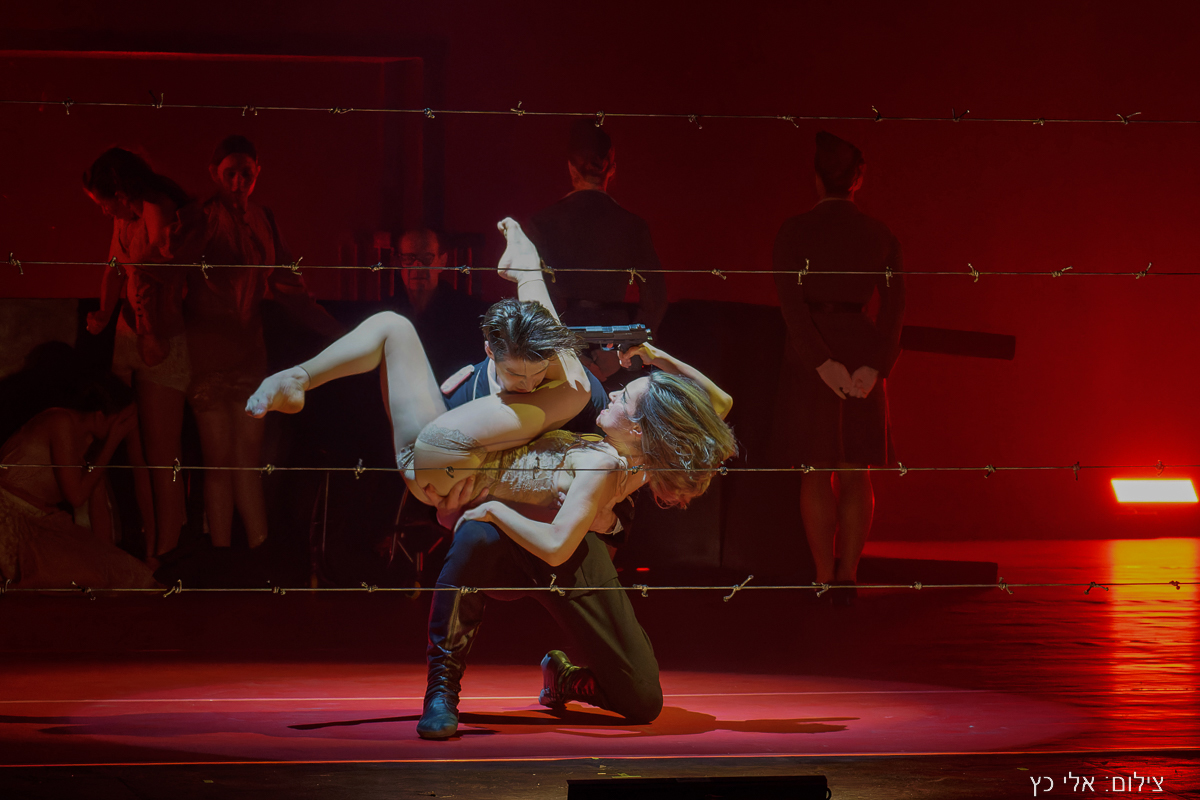
                                      Photo by © Eli Katz

There is something almost unbearable in this juxtaposition: an ordinary, warm evening; teenagers as unruffled as Tel Aviv itself, about to immerse themselves for a week in the geography of the Holocaust; and a ballet chronicling the life of Franceska Mann, the Polish-Jewish ballerina whose final dance transpired beyond the pale of the human. Memento resurrects her saga—the prewar life in Warsaw, the ghetto, and that ultimate act of defiance in the death camp.

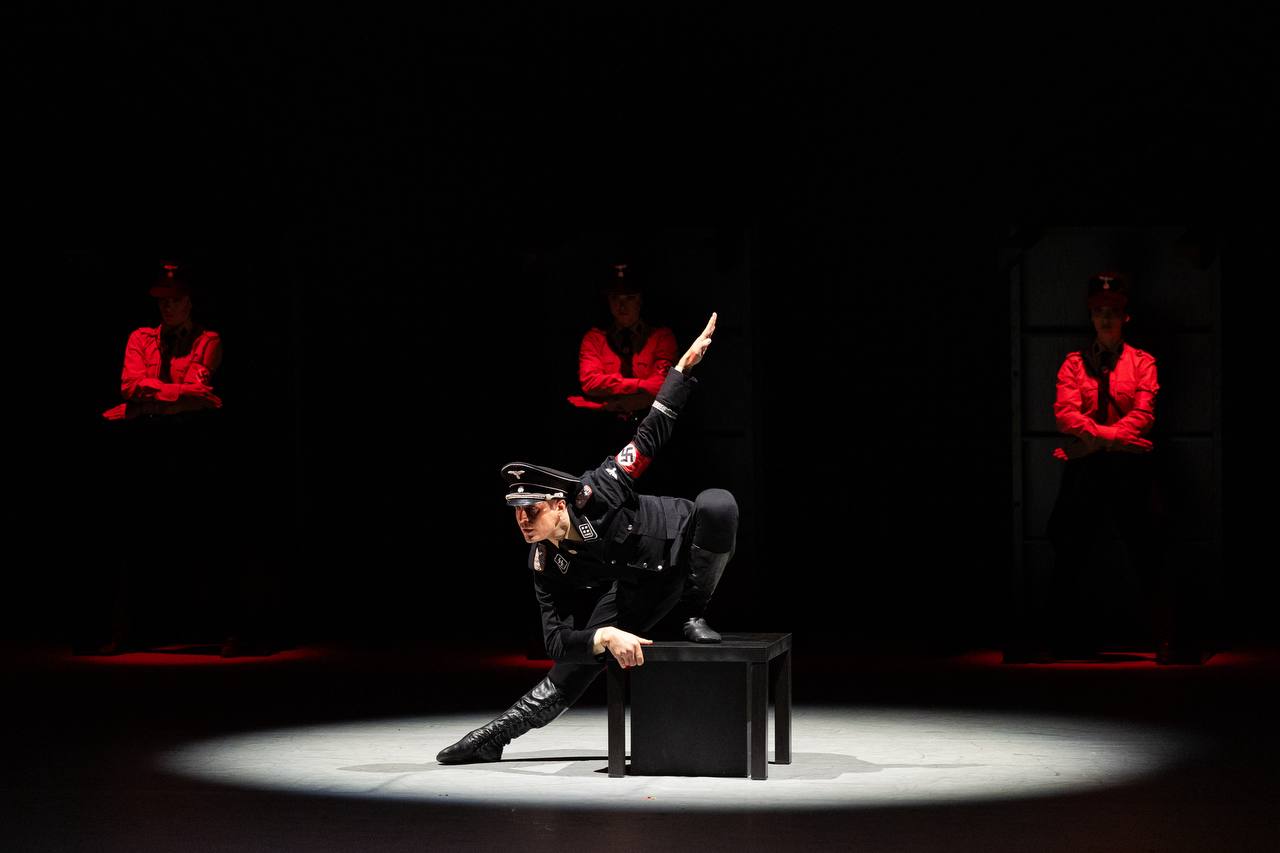
I had seen the ballet before, yet this time it felt entirely new, as though hidden currents in the familiar choreography had suddenly risen to the surface. Among them was the sinister subtext of the Nazi officer’s erotic solo on a chair, set to Ravel’s Boléro. Beginning with a languid, predatory sensuality, the dance gradually dismantles the human form beneath Ravel’s relentless drumbeat, twisting living flesh into the flawless, terrifying geometry of the swastika.

Most extraordinary of all, this dance becomes a dark mirror image of Franceska’s final performance. Here, erotic allure is an instrument of power, reducing the living body to a dead symbol. There, Franceska turns that same seductive power into a weapon, using her own body to reclaim freedom and human dignity—even if only in the final seconds of her life. It is not merely a contrast between two erotic scenes; it is a transfer of bodily autonomy. First, an alien force commands the body and bends it into an emblem of power; then, the ballerina reclaims her own vessel—and in doing so, restores her agency.

                       Photos by © Morgan Sophia Photography

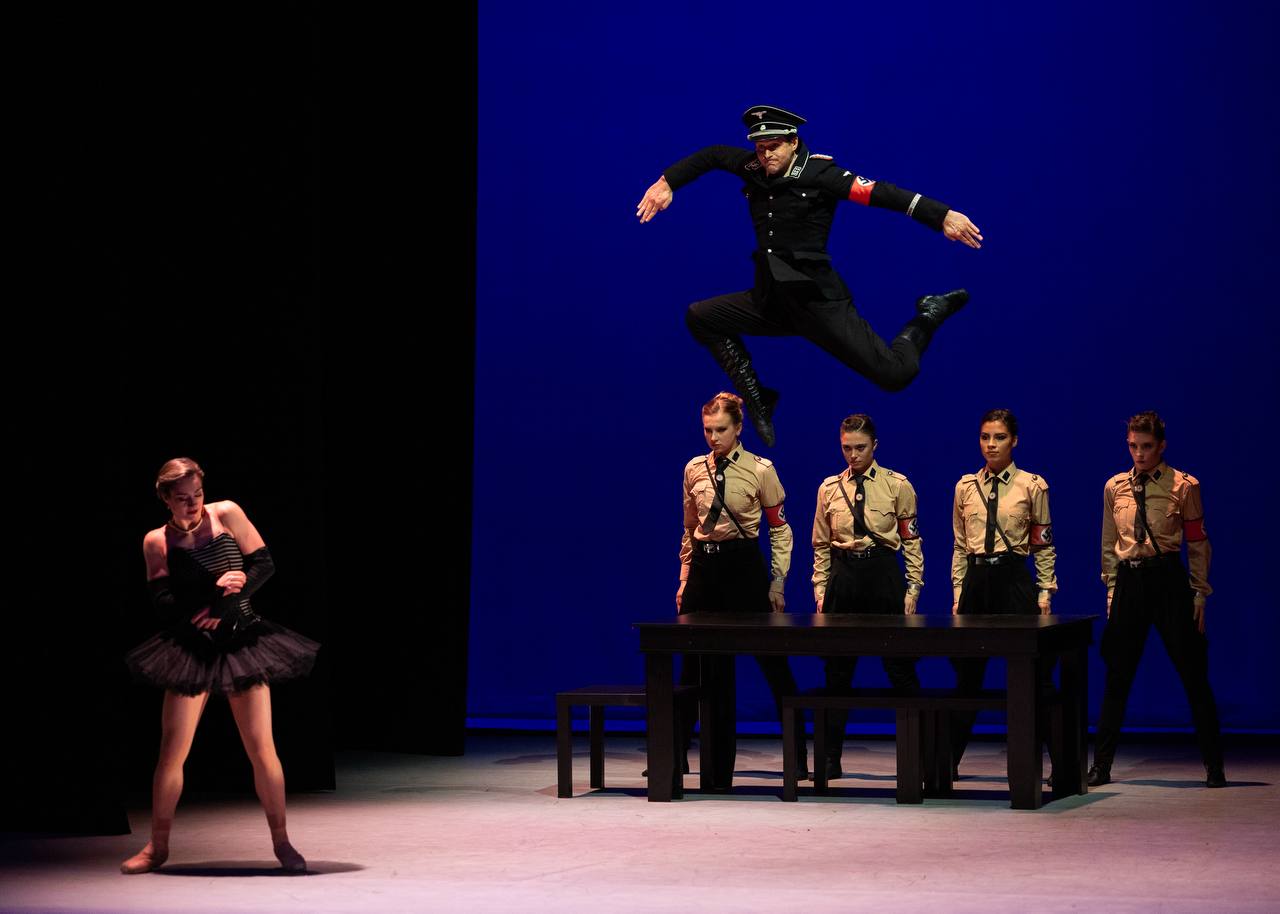
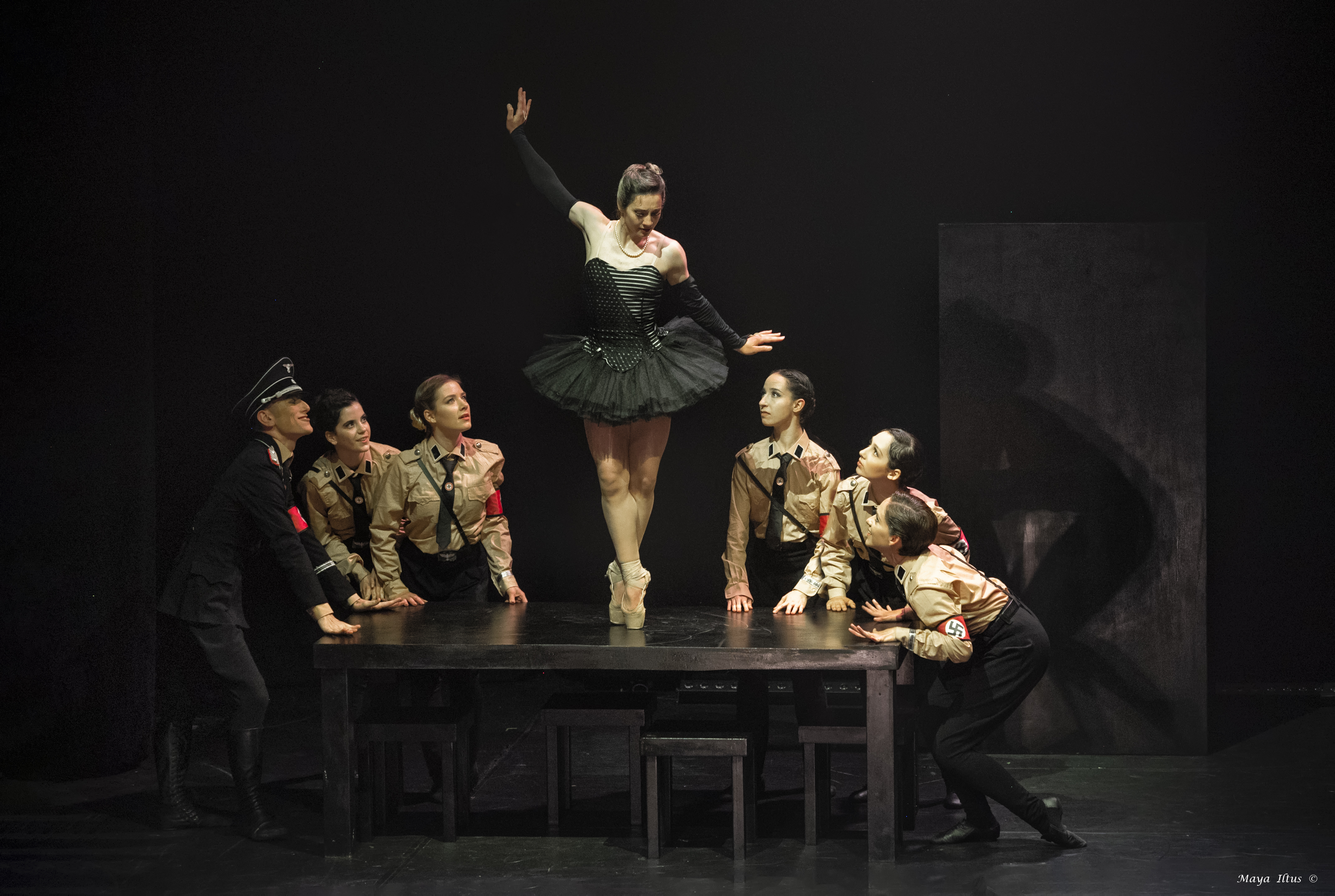
The entire scenic world of Memento is built around tables. Here, the table is far more than a piece of scenery; it serves as a central metaphor. A single piece of wood takes on a different meaning as the conceptual landscape around it shifts. On the left is the cabaret, the playground of the Nazis. They force Franceska to dance on the tabletop until she is physically exhausted, turning the high art of ballet into a spectacle of submission—a horizontal plane on which absolute power is imposed upon another’s body. On the right is the home. Here, the same table returns to its most ordinary function: people eat there, talk there, live around it. It becomes almost an altar—a locus of family memory, ritual, warmth, and the fragile continuity of ordinary life. The table anchors a small human world striving not to fall apart.

And between them lies the ghetto. The tables are raised upright and locked together to form a wall. An object designed to bring people together around a common center becomes the very thing that keeps them apart. The horizontal plane of the home becomes a vertical barrier. The space created for shared life becomes an obstacle between life and freedom.

This may be one of the most chilling ideas in Memento: a totalitarian world does not necessarily invent new objects. It appropriates familiar ones and turns them against the human being. The family table becomes a stage for humiliation; the table around which a community once gathered becomes a wall. As this single object travels from home to cabaret, and from cabaret to ghetto, the very geometry of the human world is turned upside down.

Indeed, Memento is more than a ballet about the Holocaust. It is a study of the way power alters the geometry of bodies and objects—and of the precise point at which that power finally breaks.

                      Photo by © Morgan Sophia Photography

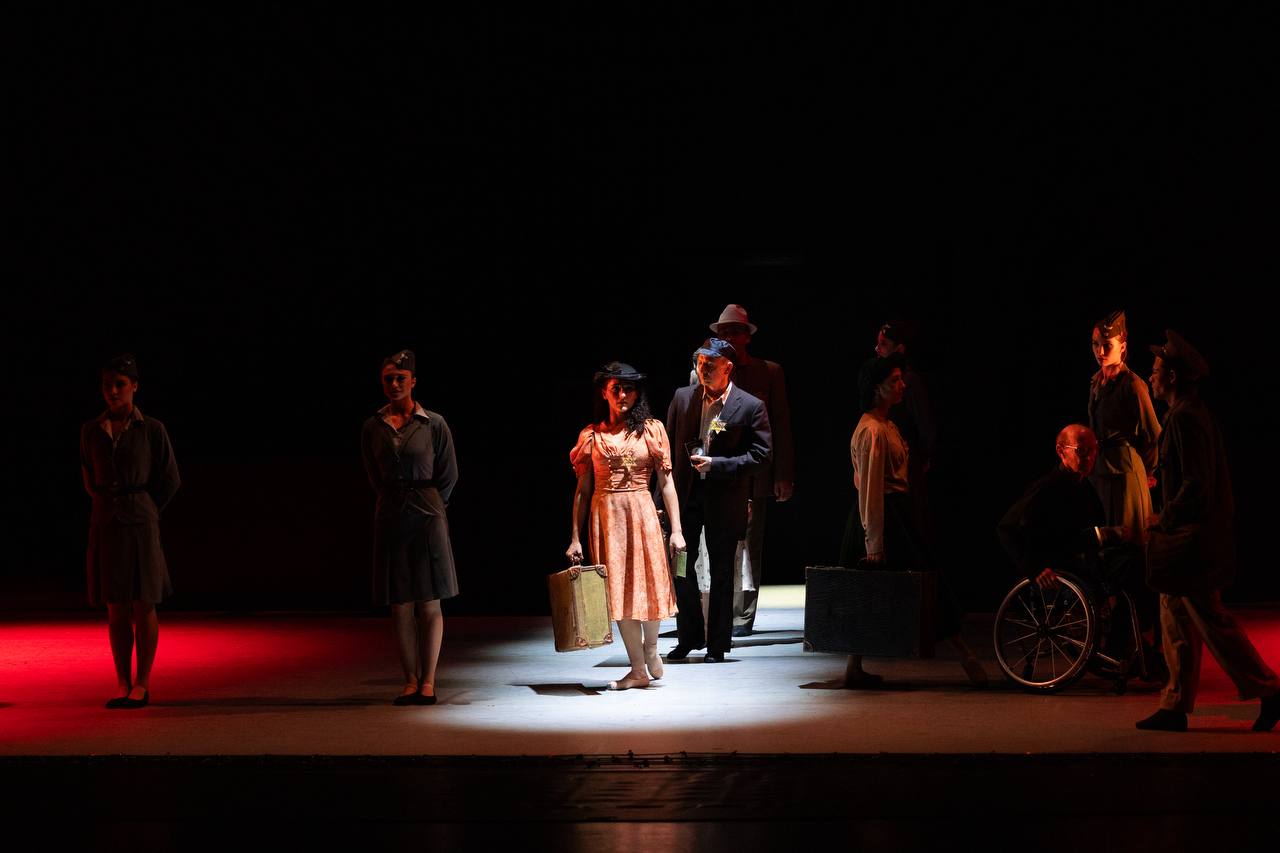
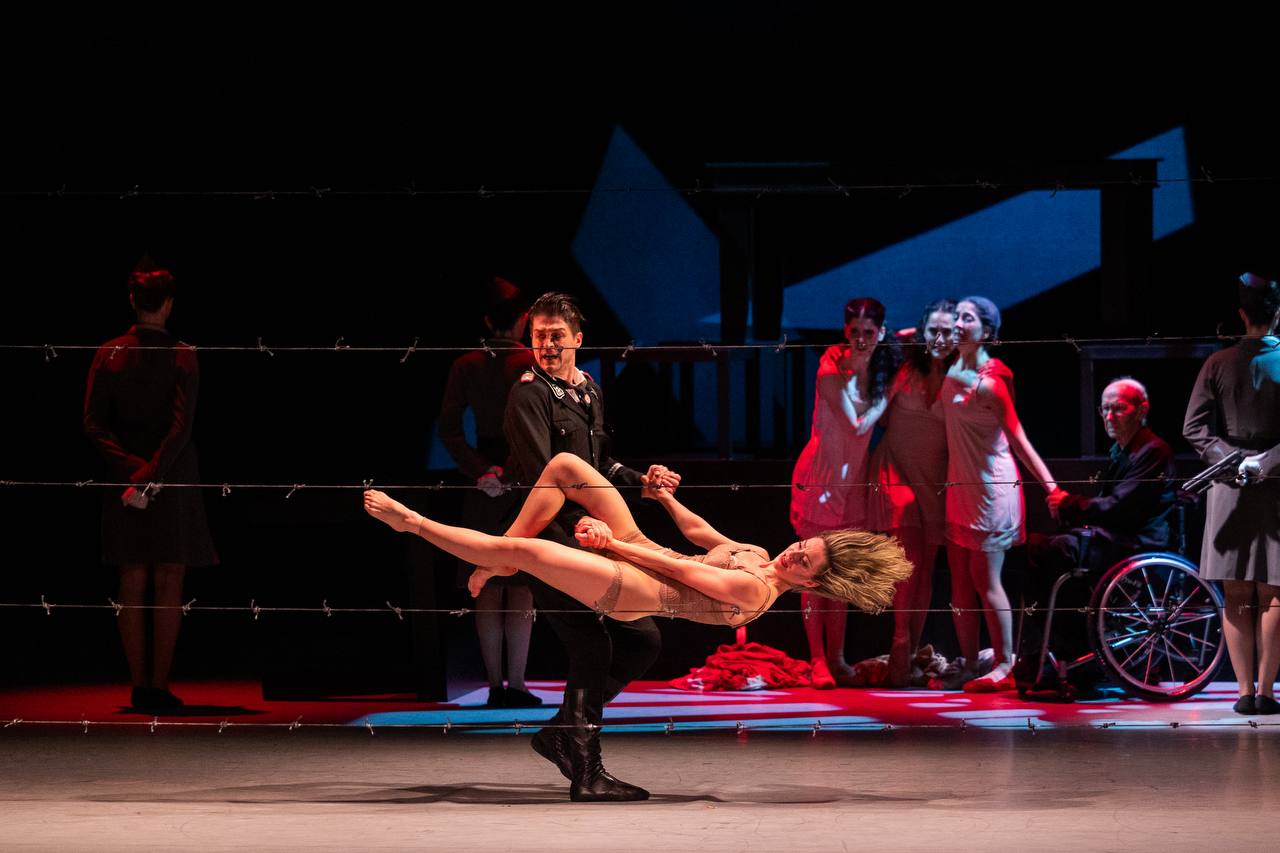
One of the most agonizing scenes depicts Jews being loaded onto a train supposedly bound for a better future, but in reality for Auschwitz. Its horror lies precisely in the fact that it begins without horror. There is bustle, movement, conversation, the restless energy of ordinary human life. People pack their suitcases and take with them whatever they hold most dear—the things one carries when one believes there is another life waiting somewhere ahead.

And then the rules change. First, the belongings disappear: the suitcase, the clothes, the personal effects, the cherished object that connects a person to home. Then the past begins to disappear with them. A name becomes a number. A biography dissolves into a blank space. A human being is reduced to an entry in a ledger. One by one, the material traces of an entire life are stripped away, until almost nothing remains.
Nothing—save for the body.

Every tableau in the ballet strikes with visceral force, making the audience feel the claustrophobia and inevitability of the Shoah rather than merely observe them. But Franceska’s cry in the finale is unforgettable: a primal, almost inhuman sound torn from somewhere deep inside her. A constricted throat. A body thrown backward. A sound that seems to tear through the chest. She snatches a pistol from a guard and shoots the Nazi officer. And yet it feels as though the gunshot begins before the weapon is even drawn. It begins in the cry—in the sudden expulsion of breath, in the voice that becomes action.

Until that moment, her body had been moving according to someone else’s will. Now, for the first time, it moves by its own command. Voice becomes gesture. Gesture becomes gunshot. The body that has been occupied by an alien power reclaims itself.

                                    Photo by © Maya Iltus

Nadya Timofeyeva has crafted a work of exquisite, intricate choreographic polyphony, partitioning the ballet into three distinct aesthetic universes, three plastic realities, three modes of human existence. The first is soul and lineage. In the movement of the Jewish community and Franceska’s family, one discerns the cadences of traditional Jewish dance. The world of the shtetl breathes a gentle, grounded communal spirit; Timofeyeva deftly integrates folkloric motifs while rendering them deeply auteurist, far removed from souvenir, Hava Nagila-style cliché. She extracts the underlying principle of folk movement—its fluidity, its softness, its capacity to gather disparate bodies into a single, living entity.

The second is the machinery of extermination: total, impersonal, almost mathematical. Its mechanics are flawlessly dissected in the aforementioned Boléro solo, overlaid with the barking cadence of Hitler’s voice. The movement of the German officers and soldiers relies on sharp lunges, right angles, rigid poses, and mechanical repetition. Here, the individual no longer creates movement; rather, movement passes through the body like an electric current through a machine component. Individuality is erased, the body is subordinated to the rhythm, and a multitude of isolated cogs are marshaled into a terrifyingly symmetrical system.

The third is high art and spiritual freedom. Casting Franceska Mann’s role in a neoclassical key, the choreographer grants her heroine her sole passport to liberation: the academic rigor of line. The purity of a position, the precision of a classical gesture—these are things that cannot be confiscated by decree. And when the cabaret table on the left becomes a scaffold, Franceska’s pointe shoes no longer serve mere aesthetics; they become an instrument of endurance. She is forced to dance to the point of physical exhaustion, a balletic marathon more harrowing than archival footage. Art is forcefully driven into the flesh until the body begins to fail. Yet even when it breaks, the neoclassical line of a step or an arabesque remains a symbol of a beauty beyond the executioners' reach; her tormentors may push her body to its limit, but they cannot corrupt the line itself.

                                    Photo by © Maya Iltus

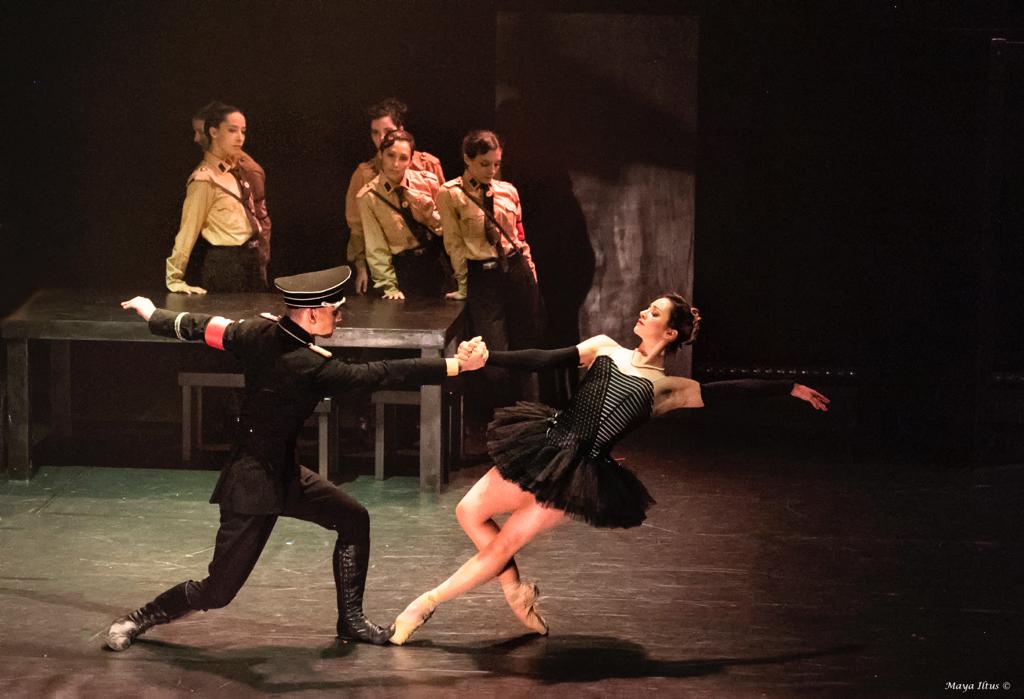
That evening, I was utterly spellbound by Anael Zateikin, a ballerina of genuine international stature whom Timofeyeva has nurtured since childhood. Her technique is impeccable, but that is only part of what makes her extraordinary. She possesses a dramatic gift rarely encountered on the contemporary stage: the ability to make an inner life visible through the smallest physical detail. I will not attempt to explain what is so extraordinary about her. Some things have to be seen. You have to see Anael for yourself. And, like her heroine, she is breathtakingly beautiful.

Her principal and terrifying counterpart is Mihai Botoc, who plays the Nazi officer with colossal, sinister charisma and unnerving physical authority. His solo is a study in choreographic sadism: polished, sated evil, utterly secure in its power and visibly intoxicated by it—until it suddenly falters, stunned by the primal rebellion of a defenseless woman. Before that moment, he treats Franceska like a marionette. He spins her, tosses her, twists her, breaks her lines as though her body had no bones. In his hands, she loses weight, verticality, her center of gravity, her very sense of physical existence. To him, she is neither woman nor great ballerina, but an object—a pliable mannequin, a trophy. And yet Zateikin’s extraordinary acting lies precisely in what happens beneath that apparent helplessness. She is not playing submission. She is playing terror.

Every movement imposed upon her looks like an act of violence against the very nature of her body. She falls because he throws her. She twists because he forces her to. She loses her verticality because she is not allowed to stand. But somewhere beneath that physical helplessness, something remains upright. The puppet is never entirely a puppet. Even when the body is forced to obey, something inside it refuses.

That is what makes the humiliation so powerful. The horror accumulates together with the rage. The helplessness becomes the place from which agency is eventually reclaimed. And so the finale acquires another dimension. When Franceska seizes the pistol at Auschwitz, she reclaims more than a weapon. She reclaims the weight of her own body, its verticality, its direction, its right to command her ultimate movement. Until then, others have moved her. Now she moves herself. And that final movement belongs to her alone.

                        Photo by © Morgan Sophia Photography

I must also single out Dina Giber as Franceska’s mother. Her taciturn yet tectonic physicality carries the full weight of Jewish maternal grief. At the family table, every movement is a silent lament and a premonition of catastrophe—a woman trying to shield her loved ones, to hold together a world that is already beginning to disappear.

She reaches, gathers, protects, covers—as though her body alone might keep the walls of the home standing, keep the family together, keep ordinary life from vanishing. There is nothing sentimental about this motherhood. It is almost physical in its urgency: to cover with one’s body, to hold, to prevent the world from coming apart.

And then comes the scene before the gas chamber. Words are almost beside the point. Giber’s face becomes its own choreography: terror, disbelief, comprehension, the desperate attempt to remain human for one moment longer. Her expression has to be seen.

                        Photo by © Morgan Sophia Photography

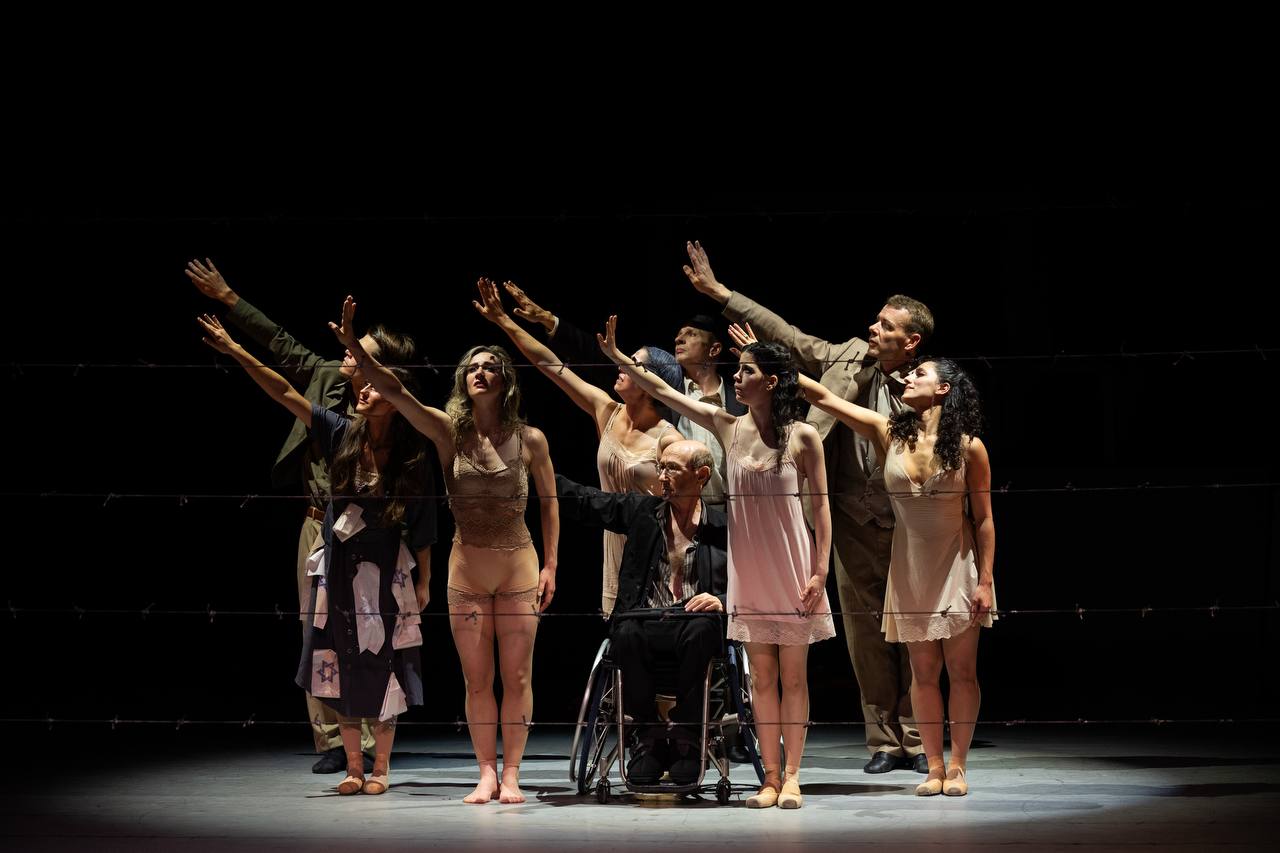
The epilogue of Memento bridges decades, and suddenly time in the ballet no longer moves in a straight line. Hatikvah rises over the stage alongside a siren—perhaps a siren of remembrance, perhaps an air-raid alarm. For people in 1943, such a sound might have meant a camp alert, an uprising, death, the end. For us today, the sound is instantly recognizable as the siren of Yom HaShoah, when the entire country falls silent.

One sound. Two eras. And between them, millions of lives.
Then Hatikvah continues: the anthem of hope, sounding here almost like an answer to the ruins of catastrophe. The Nazis sought not only to murder people, but to erase the possibility of their continuation—to erase names, memory, language, presence, the very fact of a future. But Hatikvah is still being sung. And we hear it here, in Israel, in the language of a country that exists. In the language of people who continue to live, to love, to have children, to dance, to argue, to be afraid, and to walk the streets.

That is what makes the ending of Memento so profoundly Israeli: we live with sirens. We know how quickly a siren changes the body—how it makes us stop, listen, count the seconds. So that sound can never be merely historical for us. And yet, after the siren, Hatikvah remains.
We remain.
And we remember those who did not.

Featured image: © Eli Katz


  КОЛЛЕГИ  РЕКОМЕНДУЮТ
  КОЛЛЕКЦИОНЕРАМ
Элишева Несис.
«Стервозное танго»
ГЛАВНАЯ   О ПРОЕКТЕ   УСТАВ   ПРАВОВАЯ ИНФОРМАЦИЯ   РЕКЛАМА   СВЯЗАТЬСЯ С НАМИ  
® Culbyt.com
© L.G. Art Video 2013-2026
Все права защищены.
Любое использование материалов допускается только с письменного разрешения редакции.
programming by Robertson