

home
Что посмотреть

«Паразиты» Пон Чжун Хо

Нечто столь же прекрасное, что и «Магазинные воришки», только с бо́льшим драйвом. Начинаешь совершенно иначе воспринимать философию бытия (не азиаты мы...) и улавливать запах бедности. «Паразиты» – первый южнокорейский фильм, удостоенный «Золотой пальмовой ветви» Каннского фестиваля. Снял шедевр Пон Чжун Хо, в привычном для себя мультижанре, а именно в жанре «пончжунхо». Как всегда, цепляет.

«Синонимы» Надава Лапида

По словам режиссера, почти всё, что происходит в фильме с Йоавом, в том или ином виде случилось с ним самим, когда он после армии приехал в Париж. У Йоава (чей тезка, библейский Йоав был главнокомандующим царя Давида, взявшим Иерусалим) – посттравма и иллюзии, замешанные на мифе о герое Гекторе, защитнике Трои. Видно, таковым он себя и воображает, когда устраивается работать охранником в израильское посольство и когда учит французский в OFII. Но ведь научиться говорить на языке великих философов еще не значит расстаться с собственной идентичностью и стать французом. Сначала надо взять другую крепость – самого себя.

«Frantz» Франсуа Озона

В этой картине сходятся черное и белое (хотя невзначай, того и гляди, вдруг проглянет цветное исподнее), витальное и мортальное, французское и немецкое. Персонажи переходят с одного языка на другой и обратно, зрят природу в цвете от избытка чувств, мерещат невесть откуда воскресших юношей, играющих на скрипке, и вообще чувствуют себя неуютно на этом черно-белом свете. Французы ненавидят немцев, а немцы французов, ибо действие происходит аккурат после Первой мировой. Разрушенный войной комфортный мир сместил систему тоник и доминант, и Франсуа Озон поочередно запускает в наши (д)уши распеваемую народным хором «Марсельезу» и исполняемую оркестром Парижской оперы «Шехерезаду» Римского-Корсакова. На территории мучительного диссонанса, сдобренного не находящим разрешения тристан-аккордом, и обретаются герои фильма. Оттого распутать немецко-французскую головоломку зрителю удается далеко не сразу. 

«Патерсон» Джима Джармуша

В этом фильме всё двоится: стихотворец Патерсон и городишко Патерсон, bus driver и Адам Драйвер, волоокая иранка Лаура и одноименная муза Петрарки, японец Ясудзиро Одзу и японец Масатоси Нагасэ, черно-белые интерьеры и черно-белые капкейки, близнецы и поэты. Да, здесь все немножко поэты, и в этом как раз нет ничего странного. Потому что Джармуш и сам поэт, и фильмы свои он складывает как стихи. Звуковые картины, настоянные на медитации, на многочисленных повторах, на вроде бы рутине, а в действительности – на нарочитой простоте мироздания. Ибо любой поэт, даже если он не поэт, может начать всё с чистого листа.

«Ужасных родителей» Жана Кокто

Необычный для нашего пейзажа режиссер Гади Ролл поставил в Беэр-Шевском театре спектакль о французах, которые говорят быстро, а живут смутно. Проблемы – вечные, старые, как мир: муж охладел к жене, давно и безвозвратно, а она не намерена делить сына с какой-то женщиной, и оттого кончает с собой. Жан Кокто, драматург, поэт, эстет, экспериментатор, был знаком с похожей ситуацией: мать его возлюбленного Жана Маре была столь же эгоистичной.
Сценограф Кинерет Киш нашла правильный и стильный образ спектакля – что-то среднее между офисом, складом, гостиницей, вокзалом; место нигде. Амир Криеф и Шири Голан, уникальный актерский дуэт, уже много раз создававший настроение причастности и глубины в разном материале, достойно отыгрывает смятенный трагифарс. Жан Кокто – в Беэр-Шеве.

Новые сказки для взрослых

Хоть и пичкали нас в детстве недетскими и отнюдь не невинными сказками Шарля Перро и братьев Гримм, знать не знали и ведать не ведали мы, кто все это сотворил. А началось все со «Сказки сказок» - пентамерона неаполитанского поэта, писателя, солдата и госчиновника Джамбаттисты Базиле. Именно в этом сборнике впервые появились прототипы будущих хрестоматийных сказочных героев, и именно по этим сюжетам-самородкам снял свои «Страшные сказки» итальянский режиссер Маттео Гарроне. Правда, под сюжетной подкладкой ощутимо просматриваются Юнг с Грофом и Фрезером, зато цепляет. Из актеров, коих Гарроне удалось подбить на эту авантюру, отметим Сальму Хайек в роли бездетной королевы и Венсана Касселя в роли короля, влюбившегося в голос старушки-затворницы. Из страннейших типов, чьи портреты украсили бы любую галерею гротеска, - короля-самодура (Тоби Джонс), который вырастил блоху до размеров кабана под кроватью в собственной спальне. Отметим также невероятно красивые с пластической точки зрения кадры: оператором выступил поляк Питер Сушицки, явно черпавший вдохновение в иллюстрациях старинных сказок Эдмунда Дюлака и Гюстава Доре.
Что послушать

Kutiman Mix the City

Kutiman Mix the City – обалденный интерактивный проект, выросший из звуков города-без-перерыва. Основан он на понимании того, что у каждого города есть свой собственный звук. Израильский музыкант планетарного масштаба Офир Кутель, выступающий под псевдонимом Kutiman, король ютьюбовой толпы, предоставляет всем шанс создать собственный ремикс из звуков Тель-Авива – на вашей собственной клавиатуре. Смикшировать вибрации города-без-перерыва на интерактивной видеоплатформе можно простым нажатием пальца (главное, конечно, попасть в такт). Приступайте.

Видеоархив событий конкурса Рубинштейна

Все события XIV Международного конкурса пианистов имени Артура Рубинштейна - в нашем видеоархиве! Запись выступлений участников в реситалях, запись выступлений финалистов с камерными составами и с двумя оркестрами - здесь.

Альбом песен Ханоха Левина

Люди на редкость талантливые и среди коллег по шоу-бизнесу явно выделяющиеся - Шломи Шабан и Каролина - объединились в тандем. И записали альбом песен на стихи Ханоха Левина «На побегушках у жизни». Любопытно, что язвительные левиновские тексты вдруг зазвучали нежно и трогательно. Грустинка с прищуром, впрочем, сохранилась.
Что почитать

«Год, прожитый по‑библейски» Эя Джея Джейкобса

...где автор на один год изменил свою жизнь: прожил его согласно всем законам Книги книг.

«Подозрительные пассажиры твоих ночных поездов» Ёко Тавада

Жизнь – это долгое путешествие в вагоне на нижней полке.

Скрюченному человеку трудно держать равновесие. Но это тебя уже не беспокоит. Нельзя сказать, что тебе не нравится застывать в какой-нибудь позе. Но то, что происходит потом… Вот Кузнец выковал твою позу. Теперь ты должна сохранять равновесие в этом неустойчивом положении, а он всматривается в тебя, словно посетитель музея в греческую скульптуру. Потом он начинает исправлять положение твоих ног. Это похоже на внезапный пинок. Он пристает со своими замечаниями, а твое тело уже привыкло к своему прежнему положению. Есть такие части тела, которые вскипают от возмущения, если к ним грубо прикоснуться.

«Комедию д'искусства» Кристофера Мура

На сей раз муза-матерщинница Кристофера Мура подсела на импрессионистскую тему. В июле 1890 года Винсент Ван Гог отправился в кукурузное поле и выстрелил себе в сердце. Вот тебе и joie de vivre. А все потому, что незадолго до этого стал до жути бояться одного из оттенков синего. Дабы установить причины сказанного, пекарь-художник Люсьен Леззард и бонвиван Тулуз-Лотрек совершают одиссею по богемному миру Парижа на излете XIX столетия.
В романе «Sacré Bleu. Комедия д'искусства» привычное шутовство автора вкупе с псевдодокументальностью изящно растворяется в Священной Сини, подгоняемое собственным муровским напутствием: «Я знаю, что вы сейчас думаете: «Ну, спасибо тебе огромное, Крис, теперь ты всем испортил еще и живопись».

«Пфитц» Эндрю Крами

Шотландец Эндрю Крами начертал на бумаге план столицы воображариума, величайшего града просвещения, лихо доказав, что написанное существует даже при отсутствии реального автора. Ибо «язык есть изощреннейшая из иллюзий, разговор - самая обманчивая форма поведения… а сами мы - измышления, мимолетная мысль в некоем мозгу, жест, вряд ли достойный толкования». Получилась сюрреалистическая притча-лабиринт о несуществующих городах - точнее, существующих лишь на бумаге; об их несуществующих жителях с несуществующими мыслями; о несуществующем безумном писателе с псевдобиографией и его существующих романах; о несуществующих графах, слугах и видимости общения; о великом князе, всё это придумавшем (его, естественно, тоже не существует). Рекомендуется любителям медитативного погружения в небыть.

«Тинтина и тайну литературы» Тома Маккарти

Что такое литературный вымысел и как функционирует сегодня искусство, окруженное прочной медийной сетью? Сей непростой предмет исследует эссе британского писателя-интеллектуала о неунывающем репортере с хохолком. Появился он, если помните, аж в 1929-м - стараниями бельгийского художника Эрже. Неповторимый флёр достоверности вокруг вымысла сделал цикл комиксов «Приключения Тинтина» культовым, а его герой получил прописку в новейшей истории. Так, значит, это литература? Вроде бы да, но ничего нельзя знать доподлинно.

«Неполную, но окончательную историю...» Стивена Фрая

«Неполная, но окончательная история классической музыки» записного британского комика - чтиво, побуждающее мгновенно испустить ноту: совершенную или несовершенную, голосом или на клавишах/струнах - не суть. А затем удариться в запой - книжный запой, вестимо, и испить эту чашу до дна. Перейти вместе с автором от нотного стана к женскому, познать, отчего «Мрачный Соломон сиротливо растит флоксы», а правая рука Рахманинова напоминает динозавра, и прочая. Всё это крайне занятно, так что... почему бы и нет?
Что попробовать

Тайские роти

Истинно райское лакомство - тайские блинчики из слоеного теста с начинкой из банана. Обжаривается блинчик с обеих сторон до золотистости и помещается в теплые кокосовые сливки или в заварной крем (можно использовать крем из сгущенного молока). Подается с пылу, с жару, украшенный сверху ледяным кокосовым сорбе - да подается не абы где, а в сиамском ресторане «Тигровая лилия» (Tiger Lilly) в тель-авивской Сароне.

Шомлойскую галушку

Легендарная шомлойская галушка (somlói galuska) - винтажный ромовый десерт, придуманный, по легенде, простым официантом. Отведать ее можно практически в любом ресторане Будапешта - если повезет. Вопреки обманчиво простому названию, сей кондитерский изыск являет собой нечто крайне сложносочиненное: бисквит темный, бисквит светлый, сливки взбитые, цедра лимонная, цедра апельсиновая, крем заварной (патисьер с ванилью, ммм), шоколад, ягоды, орехи, ром... Что ни слой - то скрытый смысл. Прощай, талия.

Бисквитную пасту Lotus с карамелью

Классическое бельгийское лакомство из невероятного печенья - эталона всех печений в мире. Деликатес со вкусом карамели нужно есть медленно, миниатюрной ложечкой - ибо паста так и тает во рту. Остановиться попросту невозможно. Невзирая на калории.

Шоколад с васаби

Изысканный тандем - горький шоколад и зеленая японская приправа - кому-то может показаться сочетанием несочетаемого. Однако распробовавшие это лакомство считают иначе. Вердикт: правильный десерт для тех, кто любит погорячее. А также для тех, кто недавно перечитывал книгу Джоанн Харрис и пересматривал фильм Жерара Кравчика.

Торт «Саркози»

Как и Париж, десерт имени французского экс-президента явно стоит мессы. Оттого и подают его в ресторане Messa на богемной тель-авивской улице ха-Арбаа. Горько-шоколадное безумие (шоколад, заметим, нескольких сортов - и все отменные) заставляет поверить в то, что Саркози вернется. Не иначе.

Ultra-Orthodox Ballerina Sari Mendelson: "The Body Is Not for Show; It Is a Vessel for Expression"

30.03.2026Lina Goncharsky

Tell the truth, hand on heart (and preferably with that hand tucked into a long sleeve): did you ever imagine that ballet could exist withIn the realm of faith?

I must admit, I was floored by the news. It happened almost in passing, when Nadya Timofeyeva mentioned that, alongside her work with the Jerusalem Ballet, she serves as the artistic director of Halelu—a ballet troupe comprised entirely of ultra-Orthodox Jewish women.

We are accustomed to seeing ballet as a celebration of the naked line: the exposed collarbone, the vulnerable curve of a back, the defiantly beautiful length of a leg. How else, we reason, can one defy gravity if not through maximum openness to the world?

But here, everything is different. A Haredi woman is bound by the laws of tzniut (modesty): elbows, shoulders, and collarbones must be covered; skirts must fall at least ten centimeters below the knee; clothing must be neither sheer nor form-fitting. Married women must also cover their hair with a headpiece or a wig.

And yet, in the world of Orthodox ballet, everything is "as it should be." Or rather, as it is with swans. Only these swans glide in modest attire, guarding their mystery behind the seven veils of modesty.

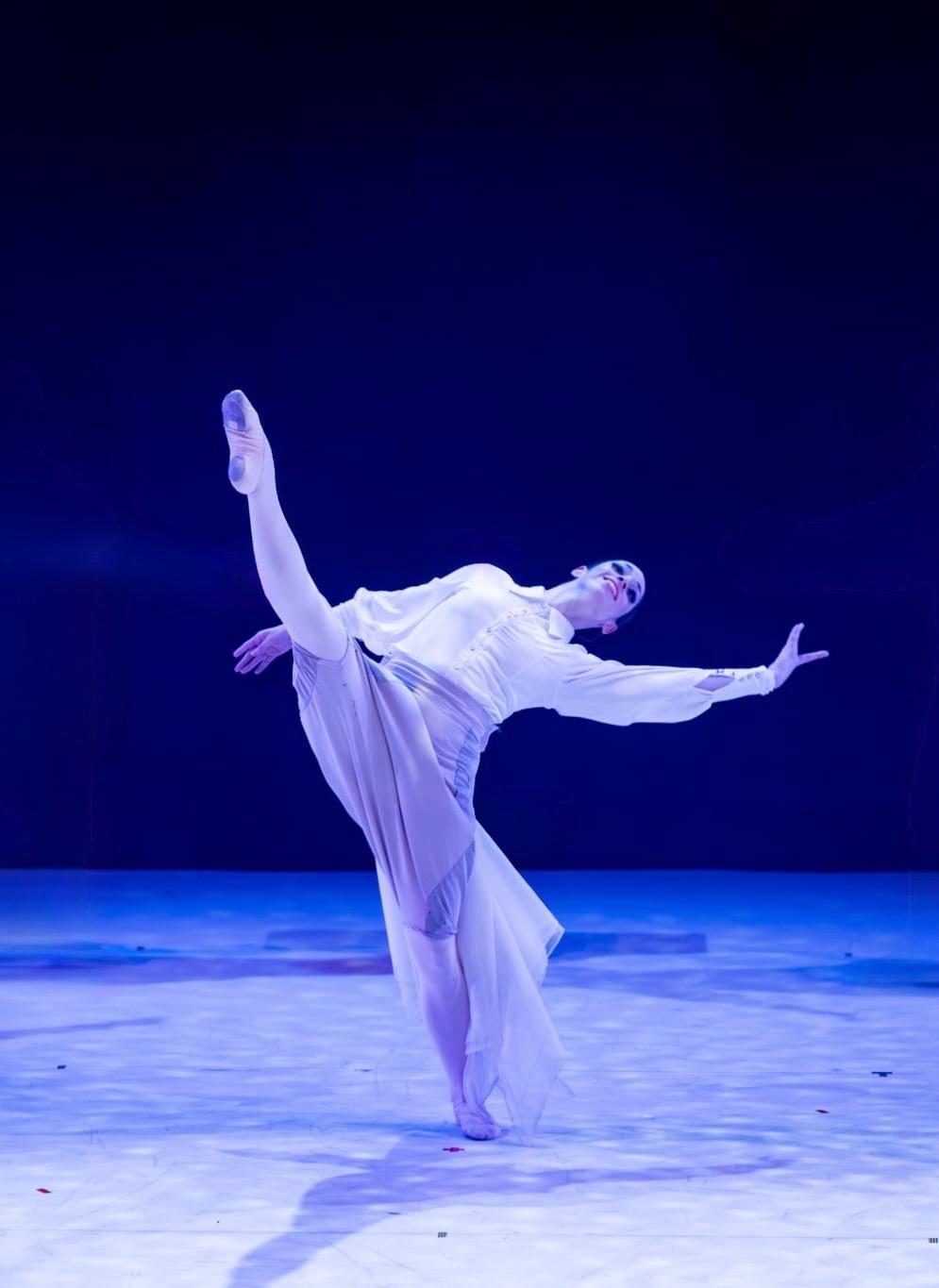
In this space, the rigors of tradition meet the weightlessness of tulle, and the spirit soars while adhering to every earthly and divine decree. Here, the tutu becomes a delicate suggestion, and the dance transforms into a prayer performed according to the strictures of classical exercise. In this world, the Swan Lake does not freeze under the winds of modernity; it hides shyly within the folds of heavy silk. There is, perhaps, more aesthetic radicalism in this absence of the "naked truth" than in the most daring avant-garde.

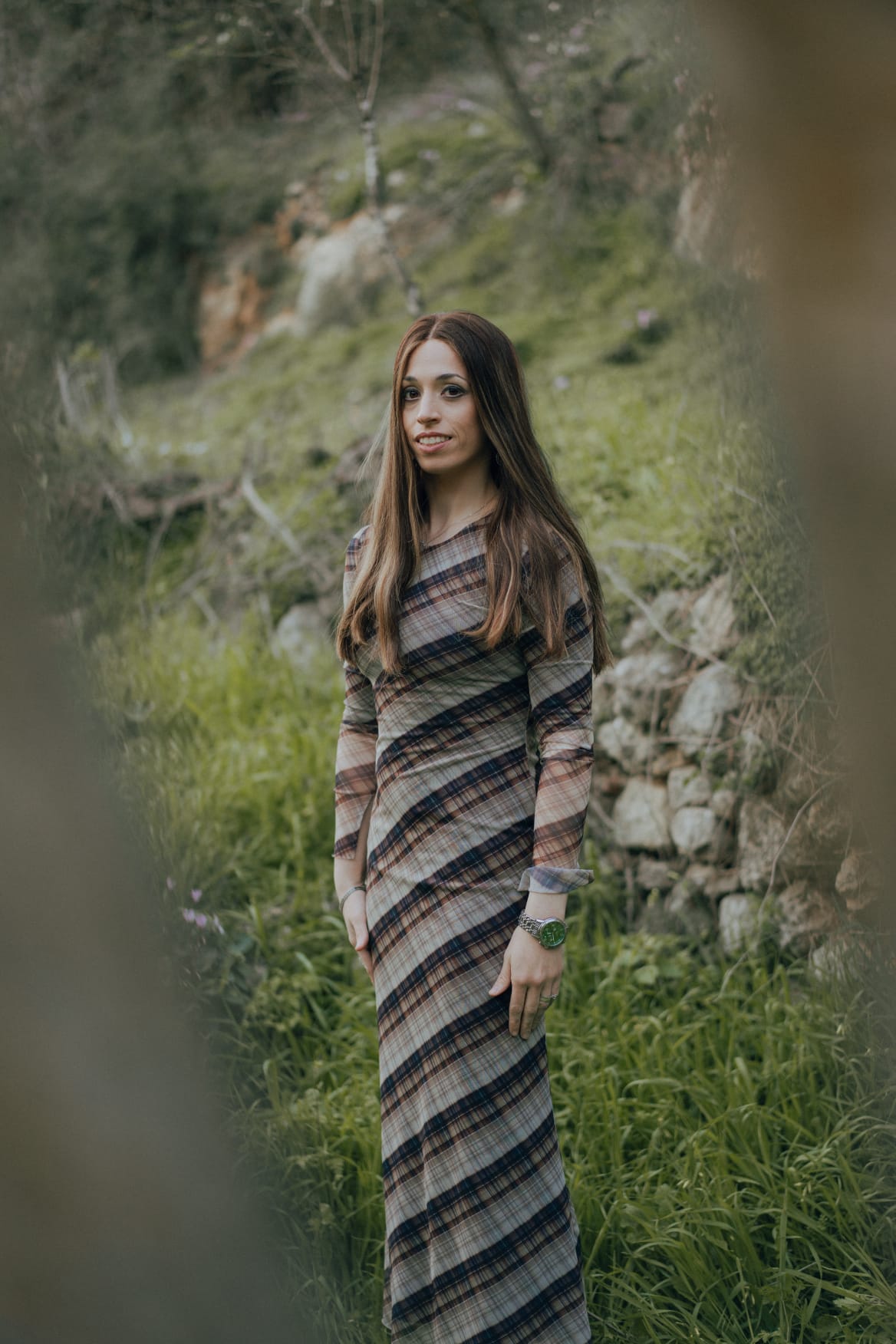
We are speaking with Sari Mendelson, a teacher at the Jerusalem Ballet, a dancer, and a person in whom two seemingly incompatible grammars coexist: classical ballet—with its cult of the line, the exposed body, and the outward gaze—and the religious way of life—with its laws of modesty, seclusion, and inward reflection. We talk about what ballet looks like in a place where it would seem impossible.

                                   Photo by Eliana Boccara

— Sari, when Nadya first told me that religious girls dance ballet, I didn't believe her. I couldn't visualize it—what you wear on stage, how it even works. Then I saw a Halelu performance and was breathless. I have a million questions, if you don't mind.

— Of course, ask anything you like.

— How did your "romance" with ballet begin within the religious world? Was it a natural progression, or did you have to fight for the right to dance?

— I didn't have to fight for the right itself. I always wanted to dance, but for a long time, I had no access to ballet because I wasn't allowed to attend performances. Later, YouTube changed everything. I just felt in my soul—this is mine. When I was fifteen, I met a woman named Shoshi Broide. She was a pioneer in the ultra-Orthodox community, opening a contemporary dance studio for religious girls. Interestingly, her parents were converts to Judaism who had "returned to the fold," as they say.

I desperately wanted to join. My mother resisted—not for religious reasons, she just didn't want me to be a dancer. But my father was incredibly supportive. He believed it was vital for girls to move, to be strong and healthy. There are four girls in our family, and we all dance.

Once, a teacher named Lorena from the New York City Ballet came to our studio. She taught us some basics, but I didn't truly understand what was being asked of me. I wanted to go en pointe, I wanted "real" ballet, but no one was teaching me the proper technique. And then, Nadya entered my life.

I should mention that I studied in a very strict ultra-Orthodox neighborhood in Jerusalem called Romema. At one point, our school's director decided that ballet was actually "bad"—that girls look at themselves in the mirror too much, stop eating, stop wanting to get married... Honestly, I think she was just overwhelmed. She had 300 students and barely any time for her own family. She decided to close the school. Right before the closure, Nadya Timofeyeva came to give us lessons. When the school shut down, my sister and I followed her.

— To the Jerusalem Ballet School?

— Yes. I’ll admit, at first, I was inconsistent. I got pregnant, had a child... but Nadya kept asking about me through my sister: "Where is she? Why isn't she coming?" She saw something in me. She used to say, "God gave you this body, but there’s nothing inside yet." She called me a "Mercedes without a driver." But over the years, she began working with me very seriously. The further I went, the more I realized this was my calling. For me, dancing is the ultimate high. I could stay in the studio from dawn till dusk; it brings me more joy than any holiday or rest.


                                    Photo by Yitzhak Hertz

— It’s fascinating that you started with modern dance and only came to classical ballet in your teens.

— That’s just how it unfolded. I didn't have real ballet pedagogy until Nadya. Later, Martin Schonberg also gave me a great deal.

— Was there ever a moment where your religious life and ballet seemed to pull in opposite directions?

— I was terrified of getting married. I wanted to keep dancing and felt I hadn't yet realized my potential. But my mother insisted I at least meet the young man they had in mind. I was eighteen and a half. I eventually agreed because my sister promised she would live out my dreams through her dancing (laughs). When I met Kobi, my future husband, I knew immediately he was "the one." Surprisingly, my real growth began after marriage. My husband supports me completely. He knows nothing about ballet, but sometimes he says things—word for word—that Nadya or Martin would say. He believes a woman should be successful, happy, and independent, with a profession she loves. He loves me not as a possession, but as a person.

— Is he also from an ultra-Orthodox background?

— Absolutely. His father is a Rosh Yeshiva (head of a Torah academy). And yet, he served in the army, as did my husband. Currently, Kobi is a paramedic in the National Search and Rescue Unit (Yachza) of the IDF Home Front Command. It is an elite, highly professional volunteer force comprised of haredim who specialize in life-saving operations under the most extreme conditions. They are the first on the scene after a rocket strike—extracting the wounded and providing aid where others cannot. Kobi hasn't slept in four weeks; I’ve nearly forgotten what he looks like.


                                   From the family archives

— And in "civilian" life?

— We call him the "neighborhood doctor." Neighbors call him at all hours, even on holidays, and he never refuses. Professionally, he works with my father processing leather for tefillin—it's grueling manual labor. But the Almighty helps him.

— How would you describe your partnership?

— We are both dominant personalities, but I let him lead. To me, he is a king. He comes from a family where women are treated like royalty—specifically, like the Queen of England. Our children feel that their mother is a queen, and they grow up with that sense of respect.

— You have five children, right?

— Yes. The oldest is sixteen, the youngest is six.

— How do you balance childbirth and dance?

— It’s not easy. During my pregnancies, which were quite difficult, I couldn't dance, but I taught until the very last day. I was back in the studio literally the day after being discharged from the hospital. Three weeks after giving birth, I was presenting my own choreography. I cannot live without dance.

— And how does choreography for religious women differ from the norm?

— The main restriction is the absence of pas de deux with male partners. It’s like jazz—all girls. However, I can teach boys; to me, it’s a profession, like being a doctor. I consulted a rabbi on this, and he gave me his blessing.

— I always assumed the Haredi community was set against the performing arts.

— It’s changing. When I started, most were against it. My parents are very liberal; my father still jokes, "You dance because of me." He believes a woman should be strong and joyful to be a good wife and mother. Ballerinas are incredibly resilient individuals. For religious girls, this provides a sense of independent thought and self-worth.

— What about the attire?

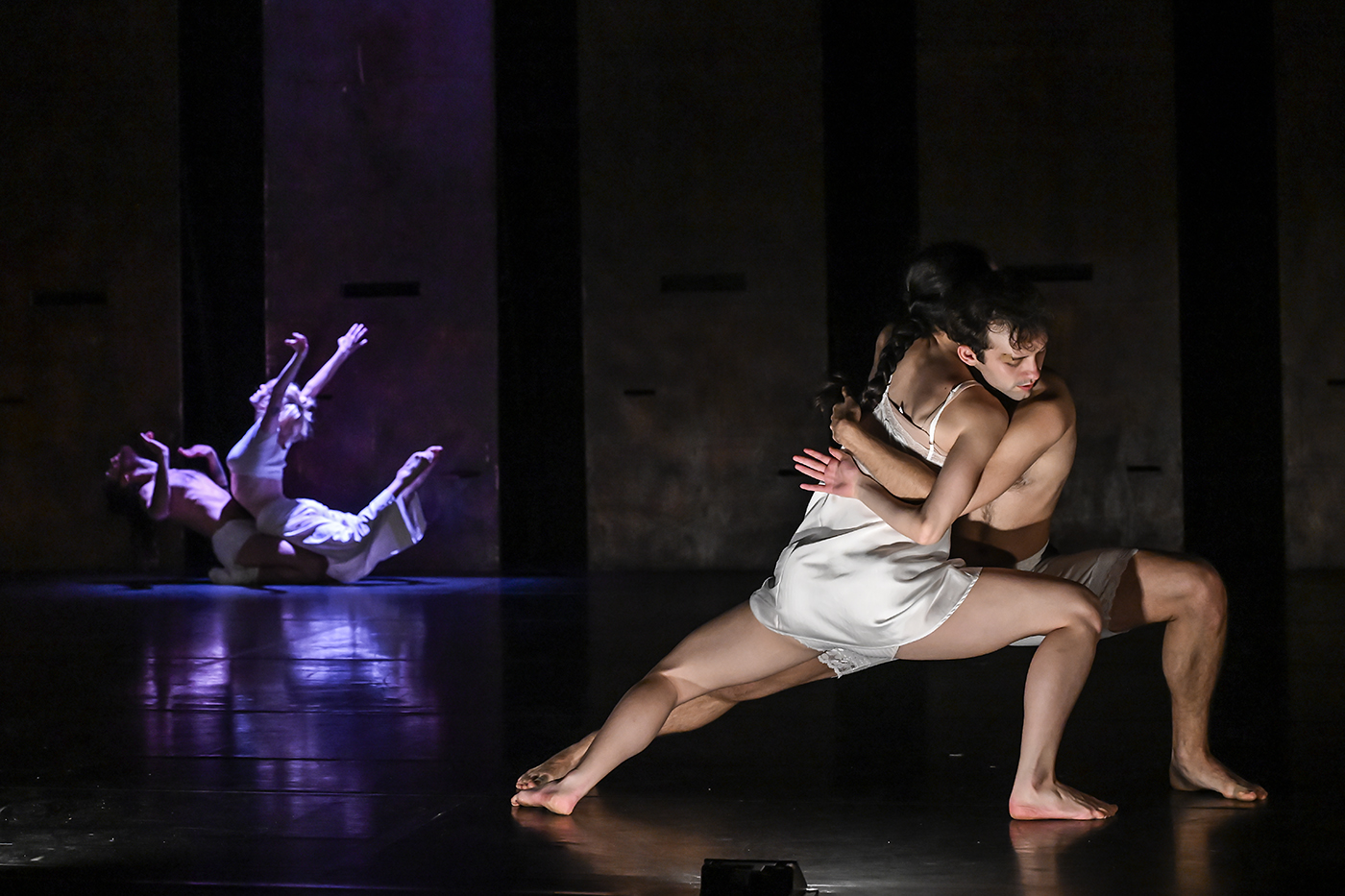
— We mostly dance in long-sleeved leotards and tights. Some choose to wear skirts. In my own studio, I don't allow skirts—not for religious reasons, but for professional ones: I need to see the muscles working. Today, there is much more freedom than there used to be. While ultra-Orthodox spaces remain strict, my studio is more open to modern influences. In Halelu, there isn't a strict dress code for rehearsals, but for performances, we adhere strictly to tzniut—covered elbows, covered knees.


                                         Photo by Gital

— You have your own studio, yet you also teach at the Jerusalem Ballet?

— Yes, I have about 50 students. Two years ago, I tore my ACL and meniscus. Since then, teaching modern dance has been difficult, so we focus on classical ballet and floor work. Because that freed up some of my time, I now work with Nadya every day.

— Ballet is traditionally built on the display of the body. In your case, the body is "contained." Is this a limitation or a new form of expressiveness?

— I don't see it as a limitation. For me, it’s a framework. Within these boundaries, you can express so much—sometimes even more, because you aren't distracted by the external. The body isn't for show; it's a vessel for expression. When you approach it that way, the expressiveness never fades. I just dance—and in that dance is everything I need to say.

— What is more important to you: discipline of the body or discipline of the spirit? Or are they one and the same?

— It’s hard to separate them. I love feeling the body, pushing it to its limits, finding new possibilities—and through that, something opens up inside me that I can pass on to the audience. When I step onto the stage, I feel that is where I truly begin to live.
 

Nadya Timofeyeva on the Practicalities:

"I treat religion with great respect and try to choose themes that have universal value while being accessible to an ultra-religious audience. My latest piece for Halelu was about mothers choosing the wrong paths for their children—how parents often try to realize their own ambitions through their kids.
In terms of movement, there are no restrictions; they perform any pas, any style—even hip-hop. They are simply dressed a certain way. And the audience, of course, is exclusively female.
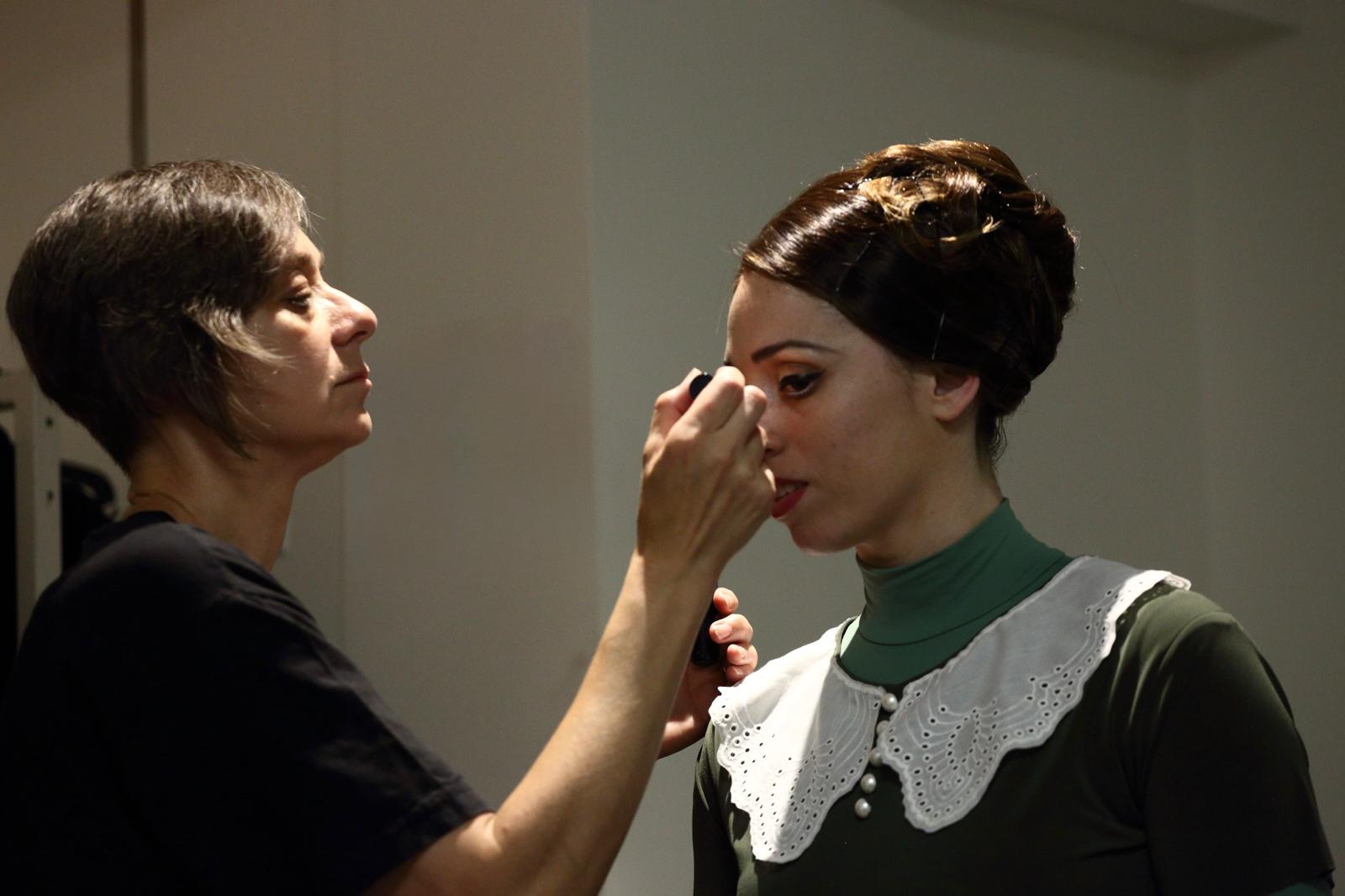
There are laws on how they must be dressed, which is challenging because I still want them to look beautiful and for their technique to be visible. Skirts must cover the knees, or they have to wear those dreaded pantaloons. If I choreograph a somersault, the skirt flies up. So, we designed custom costumes that meet tzniut requirements but remain aesthetic. Also, married women must have their heads covered. Usually, these are wigs, but did you notice how sleek their hair looks? Those are actually tights. We take dark brown tights the color of their hair, wrap them around the head, and it creates a perfect 'updo.'
There’s no difference in the performance itself. We get both secular and religious women in the audience. They are often deeply moved to see ballet of such a high caliber within the religious community."


— What do you feel when you teach, Sari?

— I feel a sense of mission—passing this on to the children. Seeing them grow stronger and more confident. I give them everything. I’m exhausted after class, but the satisfaction is immense. Even now, during the war, we practice via Zoom for three hours a day. It’s incredibly touching: you look at the screen and realize—these are my students. Their lines are becoming cleaner, their feet more arched... They wait for these classes, sirens and all.

— Do your own children dance?

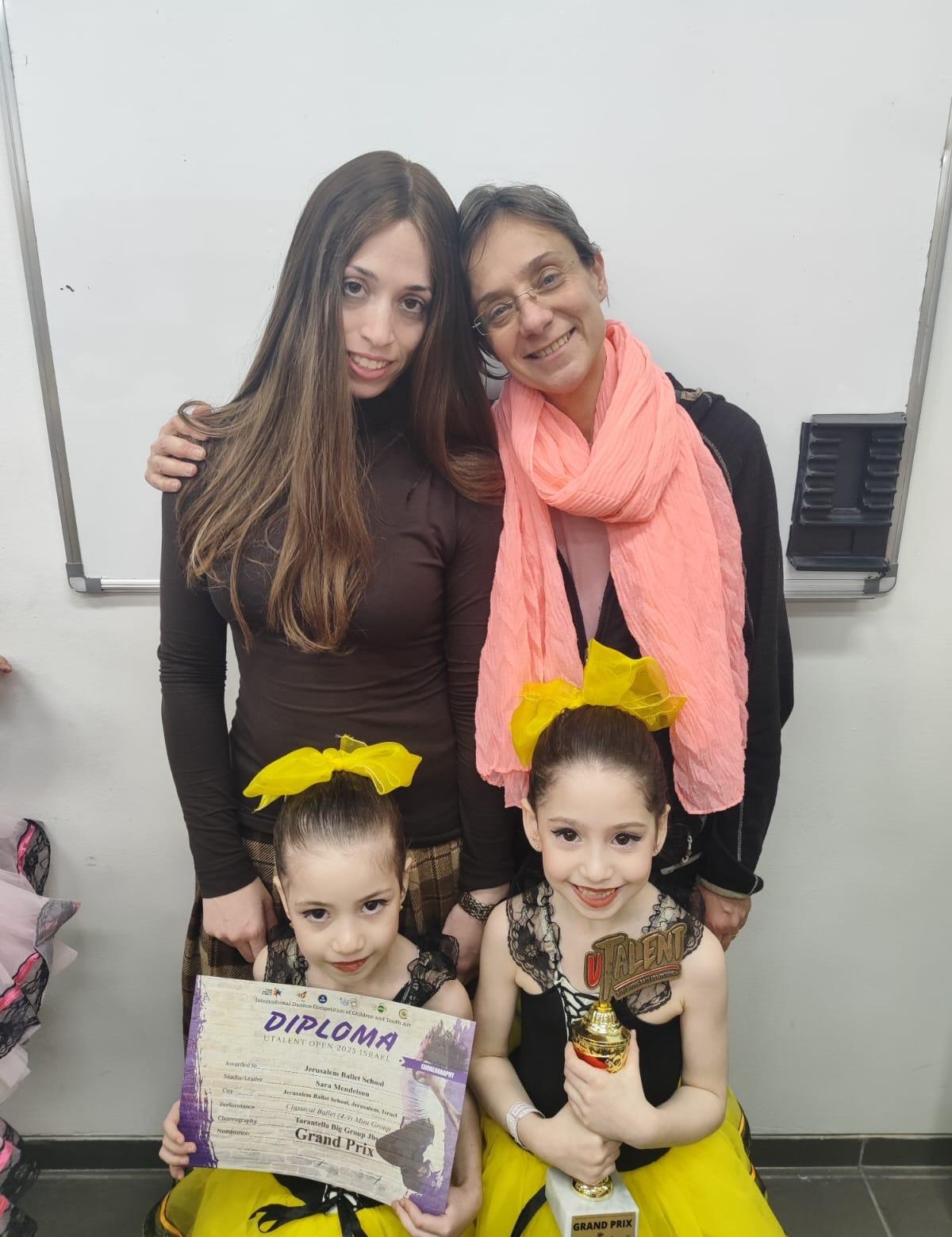
— My two daughters, ages six and eight, are already dancing. They were in the studio from birth. They don’t know any other life. They don't want to go to school in the morning; it’s a constant battle. They just want to be with Nadya, sitting for hours watching her teach. They don’t need toys; they just need to dance.


                                     From the family archives

— Is there a place for prayer in dance? Does movement ever become a conversation with God?

— I feel it when I dance to certain music—it becomes my prayer. I feel I am in dialogue with the Almighty. In the Torah, service through dance and song is one of the highest forms. Rabbi Nachman of Breslov placed immense importance on dance as a way to serve God, overcome depression, and connect with spiritual realms. He saw joy as a duty and sadness as a danger. Dance is a form of physical prayer, an expression of ecstasy and love for the Creator. If one is sad, they are urged to dance—to literally "dance out" the sorrow and doubt.

— How do you experience the silence—between movements, between notes—from the perspective of faith?

— Those are the moments when I feel myself from within. That is when the connection with God becomes deepest. I always feel my dependence on Him. No matter how hard I work, without Him, nothing succeeds.

— What do you feel just before stepping on stage?

— A pure high. It’s the most beautiful feeling in the world. If the performance is in the evening, I wait for it all day. I never feel fear, only a sense of responsibility. On stage, I see no one. There is only me. And inside—a silence that is impossible to explain.

All the photos provided by Jerusalem Ballet

© All rights reserved. No part of this material may be reproduced, redistributed, or shared on other platforms (including social media) without prior written permission.


  КОЛЛЕГИ  РЕКОМЕНДУЮТ
  КОЛЛЕКЦИОНЕРАМ
Элишева Несис.
«Стервозное танго»
ГЛАВНАЯ   О ПРОЕКТЕ   УСТАВ   ПРАВОВАЯ ИНФОРМАЦИЯ   РЕКЛАМА   СВЯЗАТЬСЯ С НАМИ  
® Culbyt.com
© L.G. Art Video 2013-2026
Все права защищены.
Любое использование материалов допускается только с письменного разрешения редакции.
programming by Robertson